 Little Barn Door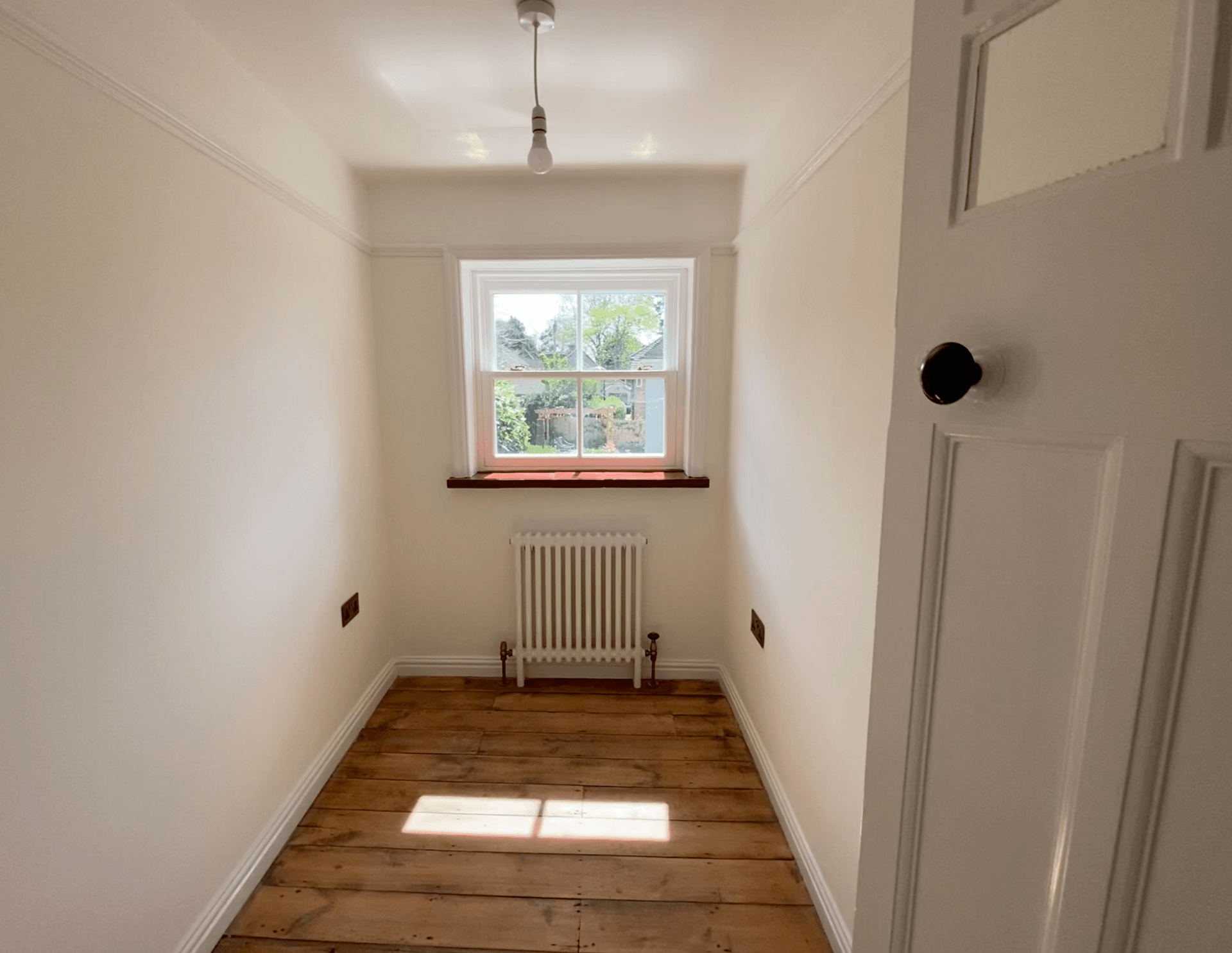
Should I bother staging my box room?
Bedroom or Box Room? Does It Really Make a Difference When Selling Your Home?
When preparing a home for sale, it's natural to focus much of your attention on the rooms that make the biggest first impression: the kitchen, living room and main bedroom. But sometimes, it's one of the smallest rooms in the house that deserves a little extra thought.
Staging a small bedroom can be a real asset to your sale. The key is helping buyers understand how that space could work for them.
Over the years, one thing we've learned from staging homes and watching how buyers respond to them is that buyers don't only consider how many rooms a property has. They're also trying to understand how comfortably those rooms will support their everyday lives.
And that's where the smallest bedroom can become surprisingly important.
Help buyers understand the space
When a bedroom is smaller than average, it can begin to prove difficult for buyers to visualise the space and see value in slightly difficult for buyers to understand.
The average size of a single bedroom in the UK - is 7 - 9 sq metres
For ease - 2m x 3.5m, 3m x 3m, 2m x 4.5m
Even when a room is well presented in decor, very few buyers will be able to immediately see a compact space as a usuable one often leaving homesellers with the same feedbakc:
- “The bedrooms are too small”
- “It's not a 3 bed, it is 2 and a box room”
- “It's not the right size for us”
Putting question marks over the whole property and leaving homes sitting on the market.
Think about purpose, not just size
When we're staging a smaller bedroom, one of the first things we consider is what role that room could realistically play for the likely buyer of the property.
For a young family, a small bedroom might make a wonderful nursery or child's bedroom. For a professional couple, a home office could be far more appealing. For a downsizer, perhaps it's a useful guest room, hobby room or somewhere for grandchildren to stay.
There isn't one answer that works for every property.
This is why understanding your likely buyer is so important when preparing your home for sale. The aim is to present the room in a way that feels both realistic for its proportions and relevant to the lifestyle your buyer is likely to lead.
Furniture can help buyers understand scale
Small rooms can actually be some of the hardest spaces for buyers to judge when they're empty.
Without furniture, there is very little to give the eye a sense of scale. Buyers may find themselves standing in the doorway wondering whether a bed will fit, where a desk might go or whether there's enough room to move around comfortably.
Carefully selected furniture can answer those questions for them.
The important part is choosing pieces that are appropriate for the proportions of the room. A thoughtfully positioned single bed, for example, can demonstrate that a compact bedroom works perfectly well as a child's or guest room. In another property, a simple desk might communicate the value of the space far more effectively.
It's not about filling the room. It's about giving buyers enough information to understand it.
Sometimes less really is more
When a room is small, every piece of furniture has to earn its place.
Keeping the layout simple allows buyers to appreciate the available floor space and makes it easier for them to imagine adapting the room to suit their own needs.
This doesn't mean making the room feel sparse. A few carefully chosen details can still make it feel warm and welcoming. Good lighting, simple window treatments, appropriate furniture and a small number of accessories can help create a finished space without overwhelming it.
The result should feel achievable rather than aspirational; somewhere a buyer can genuinely imagine using from the day they move in.
Show possibility without overpromising
Good home staging isn't about trying to make a room appear to be something it's not. In fact, we believe the opposite is much more effective.
Buyers appreciate homes that feel believable.
A smaller bedroom doesn't need to compete with the main bedroom or pretend to have generous proportions. Its value comes from showing buyers another useful space within the home and helping them understand how it could support their lifestyle.
That might mean showing them where their child could sleep, where they could work on a Friday afternoon or where visiting family could stay for the weekend.
These may seem like small details, but they're often the details that help a buyer connect the property with their own life.
Take another look at your smallest bedroom
If you're preparing your home for sale, spend a few minutes looking at your smallest bedroom through a buyer's eyes.
Consider who is most likely to buy your property and what that person might value from the space. Think about whether the current furniture helps them understand its proportions, whether the purpose of the room feels clear and whether there is anything that could be simplified to give the room a little more breathing space.
You may find that the room you were slightly worried about has far more potential than you realised.
And sometimes, a few thoughtful decisions are all it takes to help them see it.
Get new pieces in your inbox.
About one a week. Staging notes, behind-the-scenes from recent projects, no pitches.
Let’s stage your home for sale.
Tell us about the property and we’ll put together a tailored staging proposal - usually within two working days.